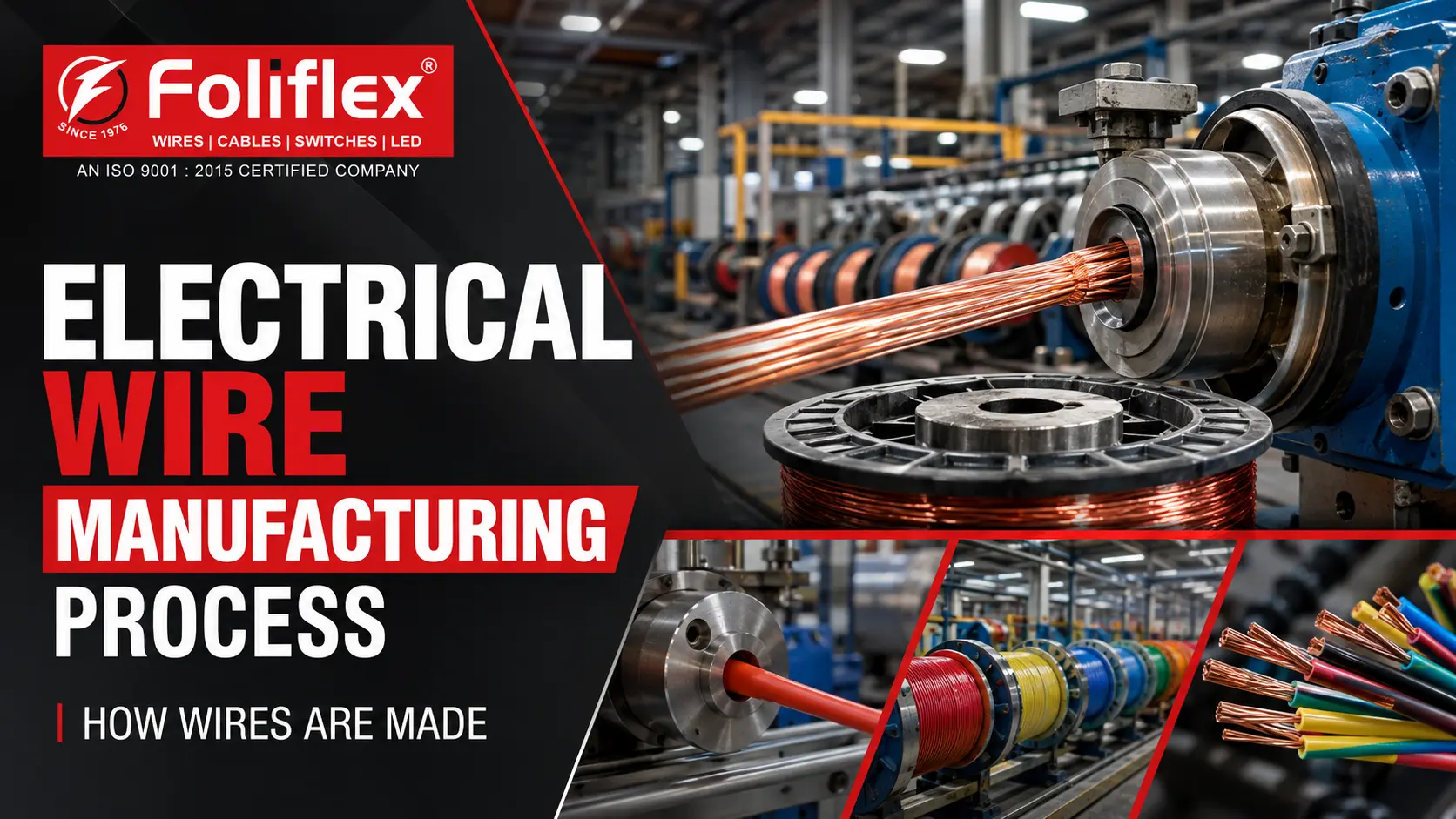
Electrical Wire Manufacturing Process: How Wires Are Made
Updated: 19 August 2026
The electric wire manufacturing process is a controlled sequence that turns conductor material and insulation compounds into a finished wire suitable for a defined electrical application. The exact steps vary according to conductor material, nominal size, strand construction, insulation type, voltage rating and the applicable product specification.
This guide explains the manufacturing stages at a practical level. It does not assume that every product or factory uses an identical machine sequence.
1. Conductor Material Preparation
Electrical wire production begins with conductor material, commonly copper or aluminium depending on the intended product. The incoming material must be suitable for further drawing and processing, and its condition affects the consistency of later stages.
2. Wire Drawing to the Required Diameter
Rod or larger-diameter conductor is progressively drawn through dies to reduce its diameter. Multiple drawing stages can be used until the required conductor size is reached. Control of diameter and surface condition is important because the conductor must match the final wire specification.
3. Annealing for Ductility
Drawing hardens the metal, so copper conductors used in many flexible or building-wire products may undergo annealing to improve ductility. This helps the conductor bend and handle more easily during later processing and installation. The required annealing conditions depend on the product design.
4. Bunching or Stranding
A solid conductor can use one conductor element, while flexible wire uses multiple fine strands combined into the required construction. Bunching or stranding improves flexibility and is common in products where the conductor must route through bends, equipment or panels.
For a deeper explanation of flexible stranded construction, see the copper flexible cables guide.
5. Insulation Extrusion
The prepared conductor passes through an extrusion line where the specified insulation compound is applied around it. The material and thickness depend on the wire type and required performance. The line controls conductor centring, insulation dimensions and surface finish before the insulation is cooled.
The manufacturing process can vary between products and applications, which is why buyers comparing wire companies in India should also consider conductor quality, insulation type, product specifications and suitability for the intended electrical application.
6. Cooling, Printing and Identification
After extrusion, the insulated wire is cooled and then marked as required. Product identification can include brand, size, voltage or standard-related information depending on the product specification. Clear marking helps installers and buyers identify the wire during storage and installation.
7. Coiling, Rewinding and Packaging
Finished wire is wound into the required coil, reel or package length. Consistent winding helps protect the product during handling and makes quantity verification easier for dealers, contractors and project buyers.
8. Quality Checks Before Dispatch
Quality control should match the product specification rather than rely on appearance alone. Depending on the wire type, checks can include conductor dimensions, conductor resistance, insulation thickness, continuity, surface finish and other electrical, mechanical or fire-performance tests specified for the product.
Foliflex publishes company certification information separately on its certifications and quality standards page. Buyers should verify the applicable product marking and documentation for the exact wire being purchased.
How the Process Changes by Wire Type
| Wire Type | Process Difference to Watch |
|---|---|
| Solid conductor wire | Uses a single conductor element rather than a flexible multi-strand construction. |
| Flexible wire | Uses multiple fine strands and requires controlled bunching or stranding. |
| FR / FR-LSH building wire | Uses an insulation compound selected for the required fire and smoke performance. |
| Multicore cable | Requires multiple insulated cores to be laid together before the final sheath is applied. |
| Armoured cable | Adds protective layers such as armour and outer sheath according to the cable design. |
Why Manufacturing Consistency Matters
Electrical performance depends on more than a brand name. Consistent conductor size, strand construction, insulation thickness, material handling and testing all contribute to whether a finished wire matches its intended specification. For buyers, the practical check is to select the correct product category and verify product marking and documentation before installation.
At company level, buyers can compare wire companies in India while still checking the specification and documentation of the exact wire being purchased.
Frequently Asked Questions
Conclusion
Wire manufacturing is a specification-led process in which conductor preparation, drawing, strand construction, insulation and quality control must work together. Understanding these stages helps buyers evaluate technical information more clearly and avoid choosing a wire only by price or appearance.